Jean Schaack (1895 – 1959)Info
Jean Schaack (1895 – 1959)
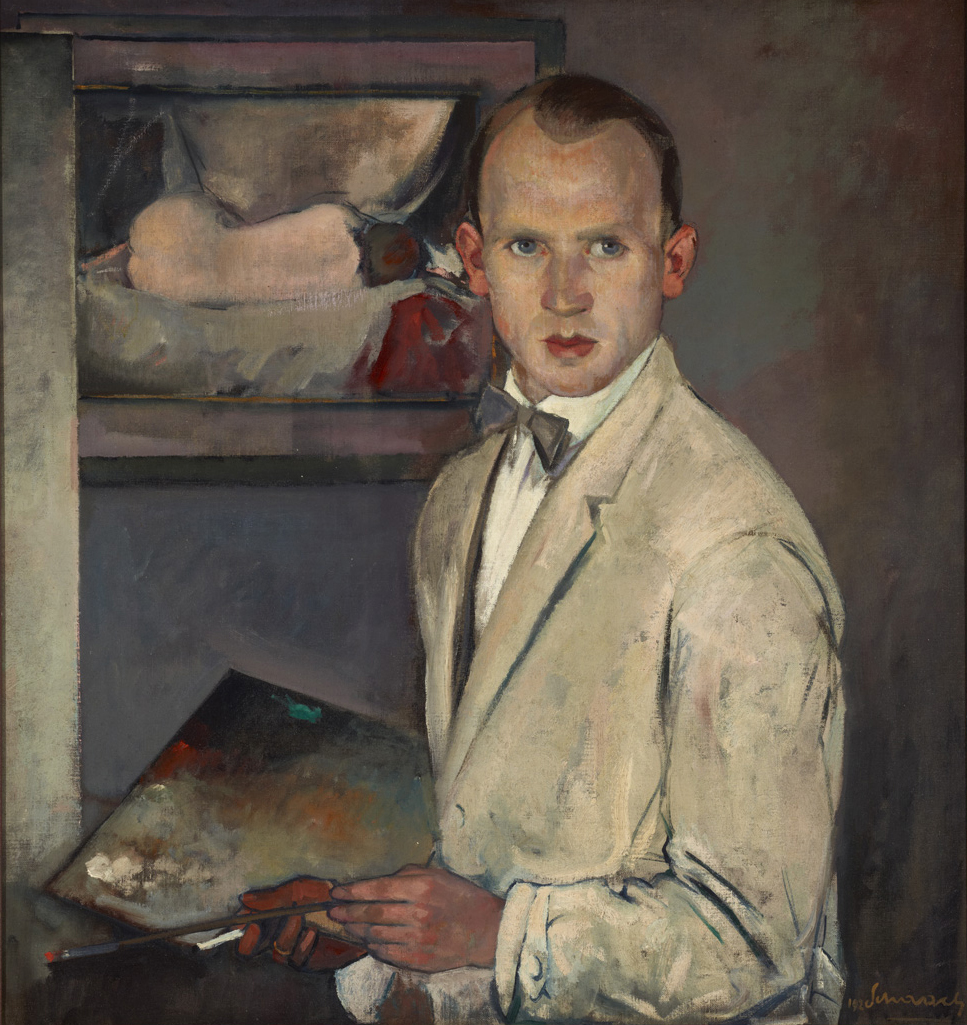
Autoportrait with nude, 1920, oil on canvas
This self-portrait – a new 2013 acquisition of the City of Luxembourg – shows Jean Schaack in the typical pose of an academic artist dressed in fine garb and holding palette and brush. At the same time the nude female visible in the background refers to his special attributes as a painter. The work is very expressive, despite Schaack working with a rather monochrome colour palette, resulting in clearly defined contours with a bold white. The concentrated look is emphatic; the observer almost feels like an intruder. The artist was born in Walferdange and studied in Strasbourg and Munich. He worked in well-known private ateliers. As early as 1915, he exhibited his work alongside that of Joseph Kutter and Jean Noerdinger. Schaack’s work is very diverse – encompassing expressive to impressionist landscapes, still life works and portraits.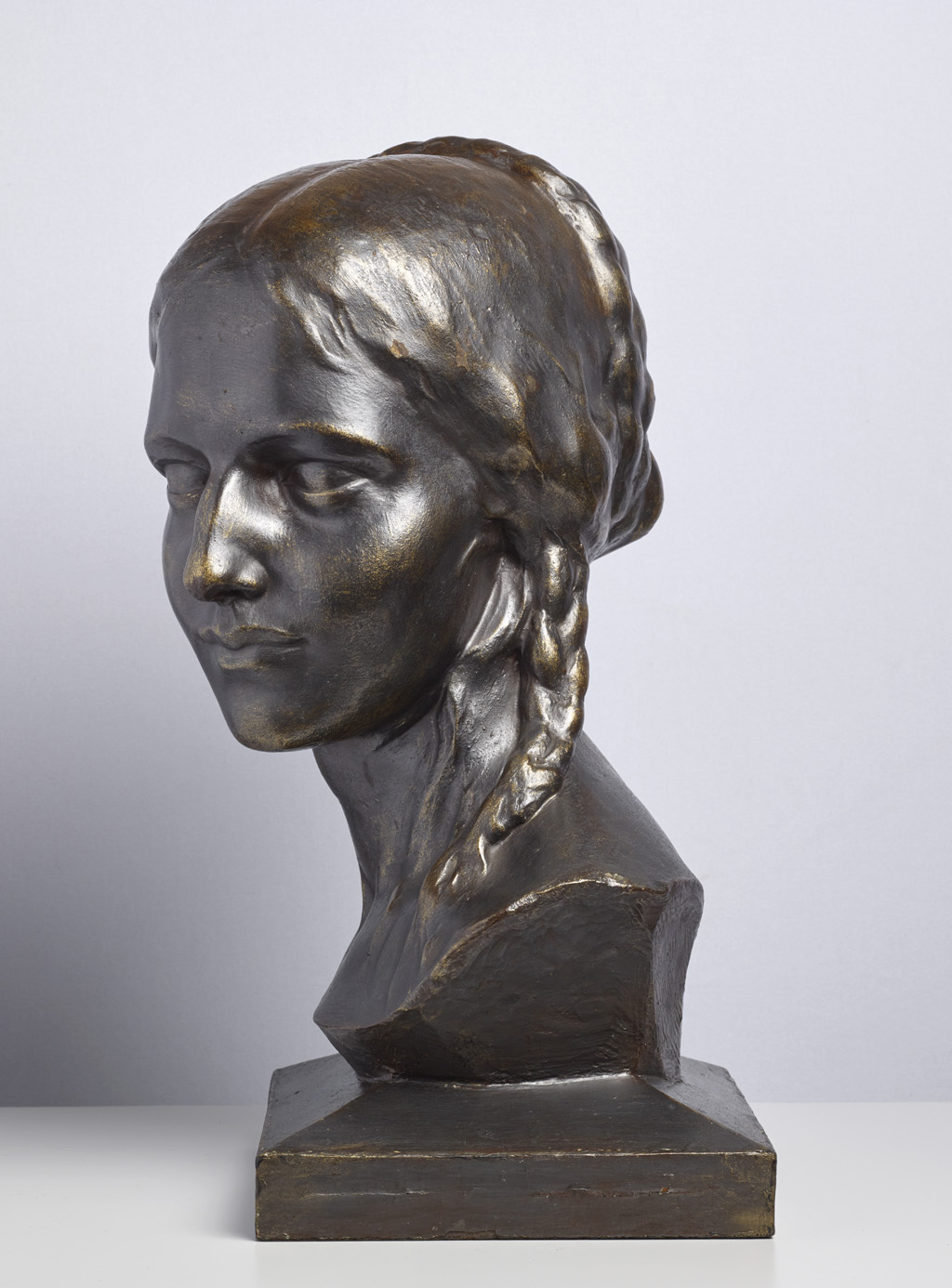
Claus Cito (1882 – 1965)Info
Claus Cito (1882 – 1965)
Bust of a woman, around 1929, plâtre patiné, moulage en plâtre
Cito attended the Academy of Fine Arts in Düsseldorf. One of his teachers there was Peter Behrens. Initially, Cito wanted to be a painter but later changed to sculpture. He was friends with August Macke, among others. In 1909, he went to Brussels and finally settled in Bascharage as a sculptor in 1921. Stylistically speaking, his artworks are categorised as Art Déco. His best-known work is the Gëlle Fra (Golden Lady) from 1923, which serves as a monument for victims of the First World War on the Place de la Constitution in Luxembourg City.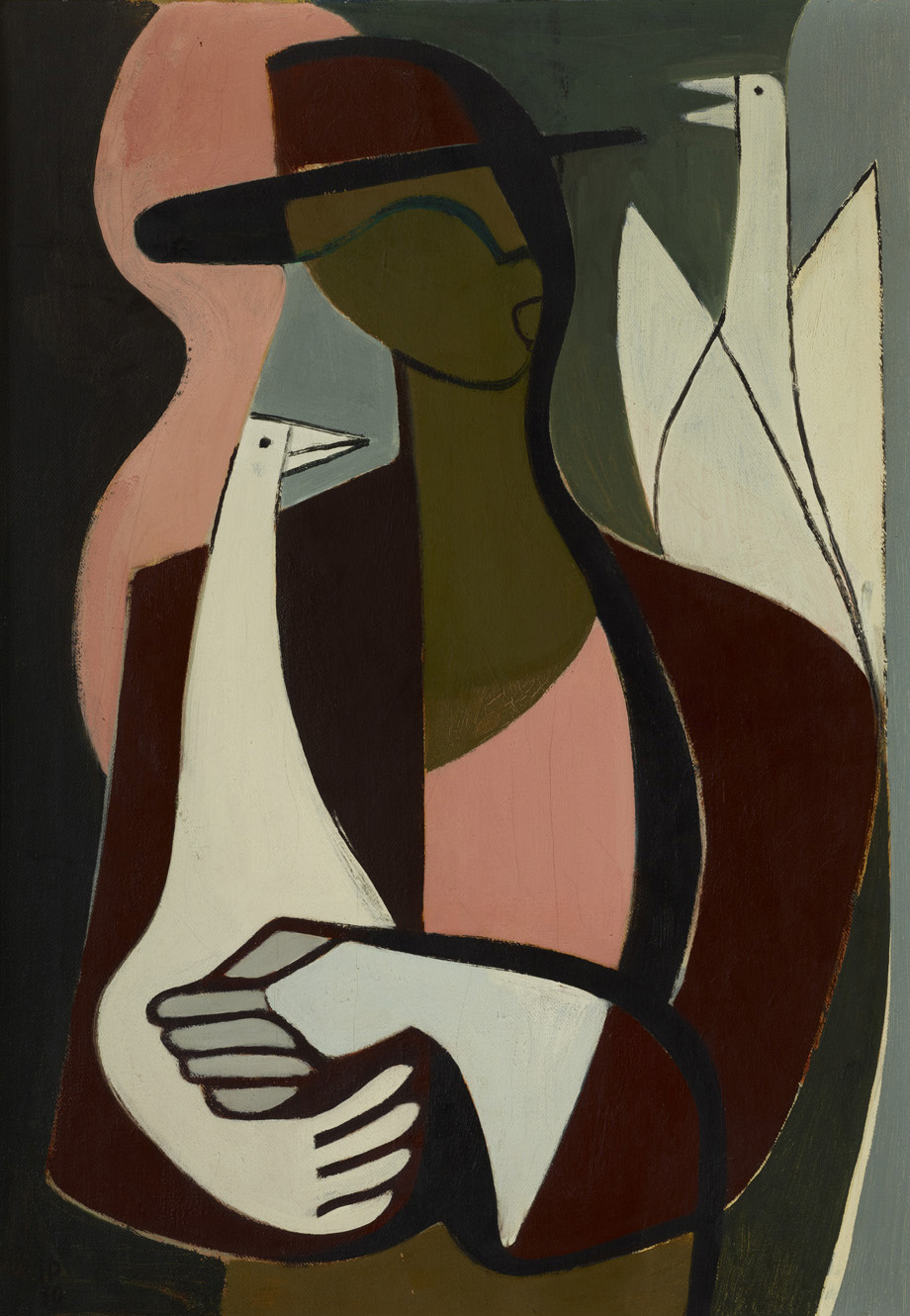
Joseph Probst (1911 – 1997)Info
Joseph Probst (1911 – 1997)
The Goose Seller, 1950, oil on canvas
After completing his studies in Brussels and Vienna, Joseph Probst drew attention to himself as a representative of the Paris School. His works are marked by a growing reduction in form language and increased colour richness. The abstract style of his oil paintings and gouaches became progressively geometrical over the course of the 1950s. His colour palette became more varied and broke loose from purely muted dark colours. This 1950 portrait shows a man with white geese, whose forms are already strongly dissolved, despite the motive still being recognisable in a figurative sense. From 1951, Probst created his first non-figurative works and gradually moved more closely towards lyrical abstraction. In 1954 he was a co-founder of Iconomaques, a group of abstract artists in Luxembourg opposing the figurative, representational art of painting.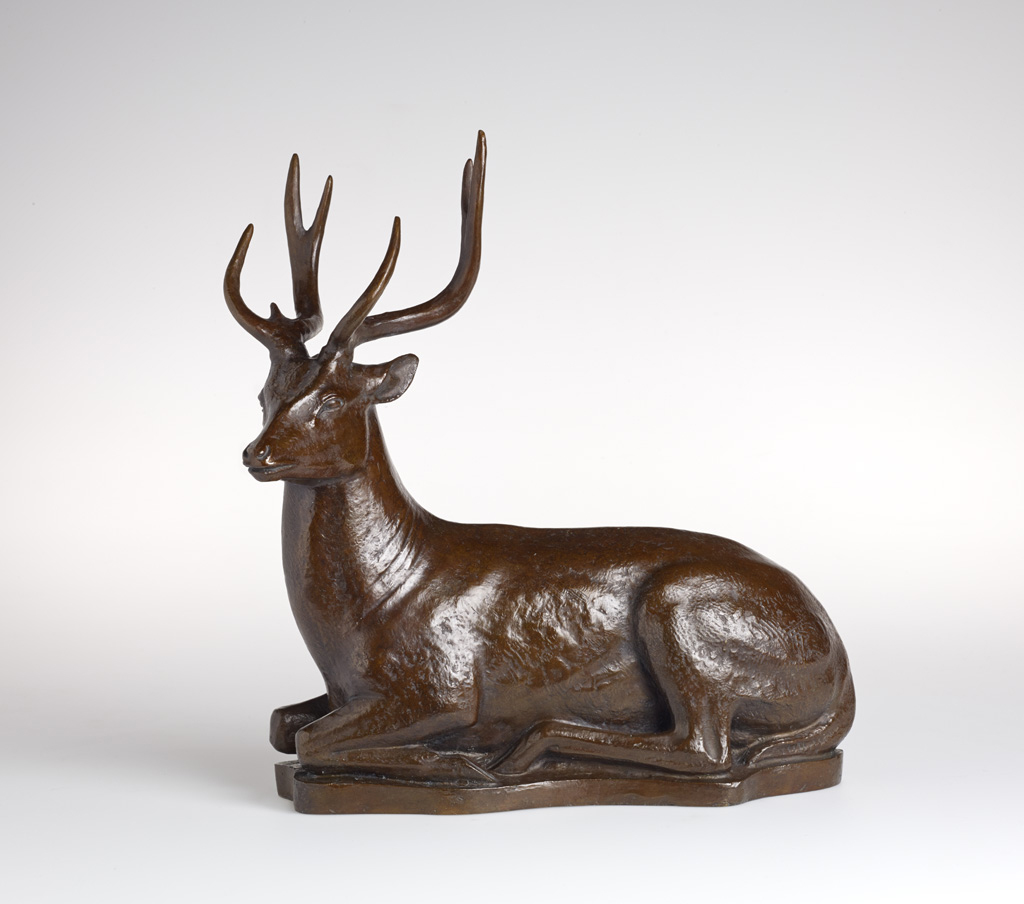
Auguste Trémont (1892 – 1980)Info
Auguste Trémont (1892 – 1980)
Roar, before 1973, bronze sculpture
Luxembourgish sculptor and painter Auguste Trémont worked mostly in Paris and specialised in animal sculptures. His works came in several formats and he used various materials to carve out the characteristics of the animal species in question. He was in particular fascinated by the menagerie of the Jardin des Plantes in Paris, home to a wide range of animals, which provided him with a rich treasure trove of subjects. This is how the two large lions that adorn the entrance to Luxembourg City’s Town Hall came to be. The 1930s were his most productive years. After the Second World War he returned to Luxembourg, where he created monuments to the fallen. Trémont did not, however, cease to make animal sculptures; instead he incorporated the domestic animal world into his small-format works of plastic art and sculptures, as testified by the delicately worked stag and the recumbent wild boar.
Lucien Wercollier (1908 – 2002)Info
Lucien Wercollier (1908 – 2002)
Interlacing, 1976 - 1991, bronze patina
Lucien Wercollier created numerous works for public spaces from various materials. These works are known beyond his homeland of Luxembourg and share a pursuit of absolute beauty, balance and harmony. After the late 1950s, he favoured flowing, organic, sensual feminine forms, which he is now typically associated with. Many of his works he created in bronze, subsequently lending them a softer and warmer look with a dark patina finish. Wercollier’s artistic career took him to Brussels and Paris, where he was strongly influenced by Aristide Maillol. In 1942, as a result of his membership in the Luxembourg resistance, he was banned from working and later deported to various concentration camps. Upon his return, he joined the artist group La Nouvelle Équipe in 1948, which distanced itself from the traditional art scene. This sculpture is on permanent display in the garden of Villa Vauban.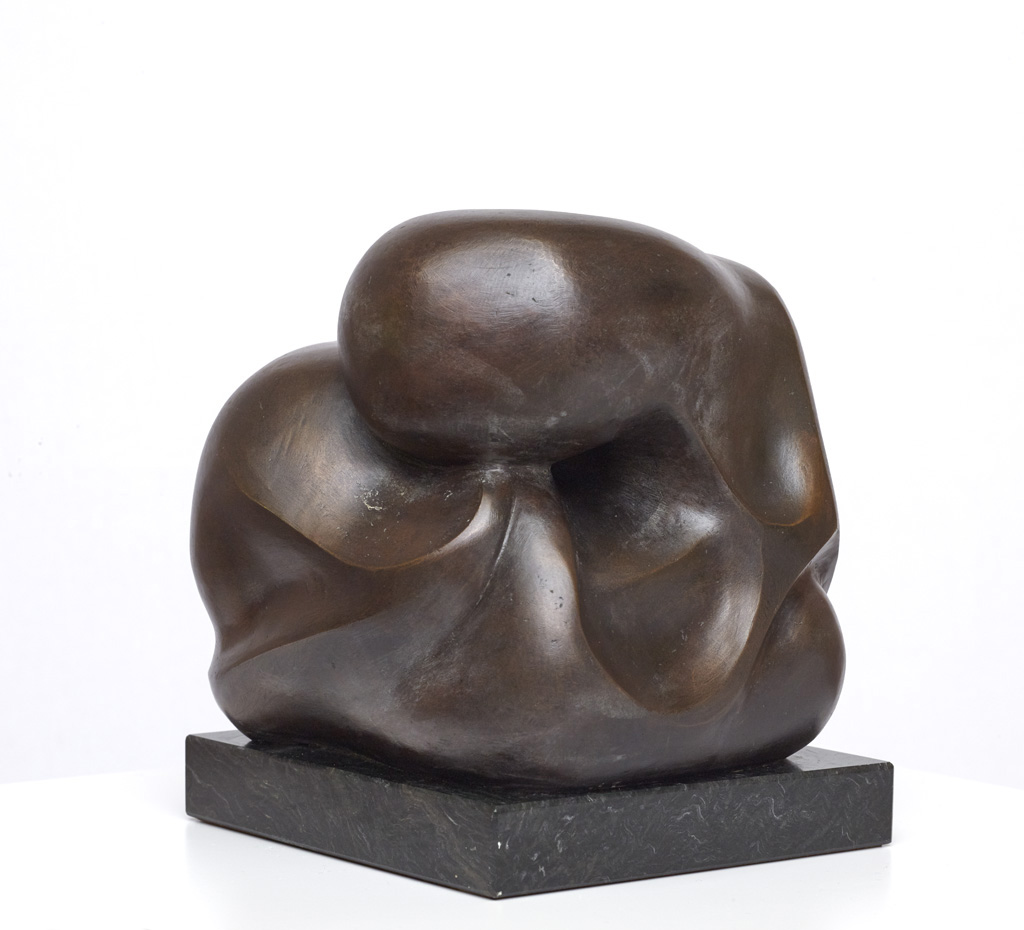
Jean-Pierre Georg (1926 – 2004)Info
Jean-Pierre Georg (1926 – 2004)
Meditation, 1982, bronze sculpture
Luxembourg artist Jean-Pierre Georg’s sculptures are often characterised by their organic, almost physically figurative, yet abstract, form. This form is accentuated by a polished and rounded surface treatment. Georg’s preferred materials include wood, marble and bronze. After initial studies at Esch-sur-Alzette’s vocational school, he was a student of Lucien Wercollier from 1957 to 1962, whose style left a lasting influence on him. Georg dedicated himself exclusively to sculpture from 1976 onwards.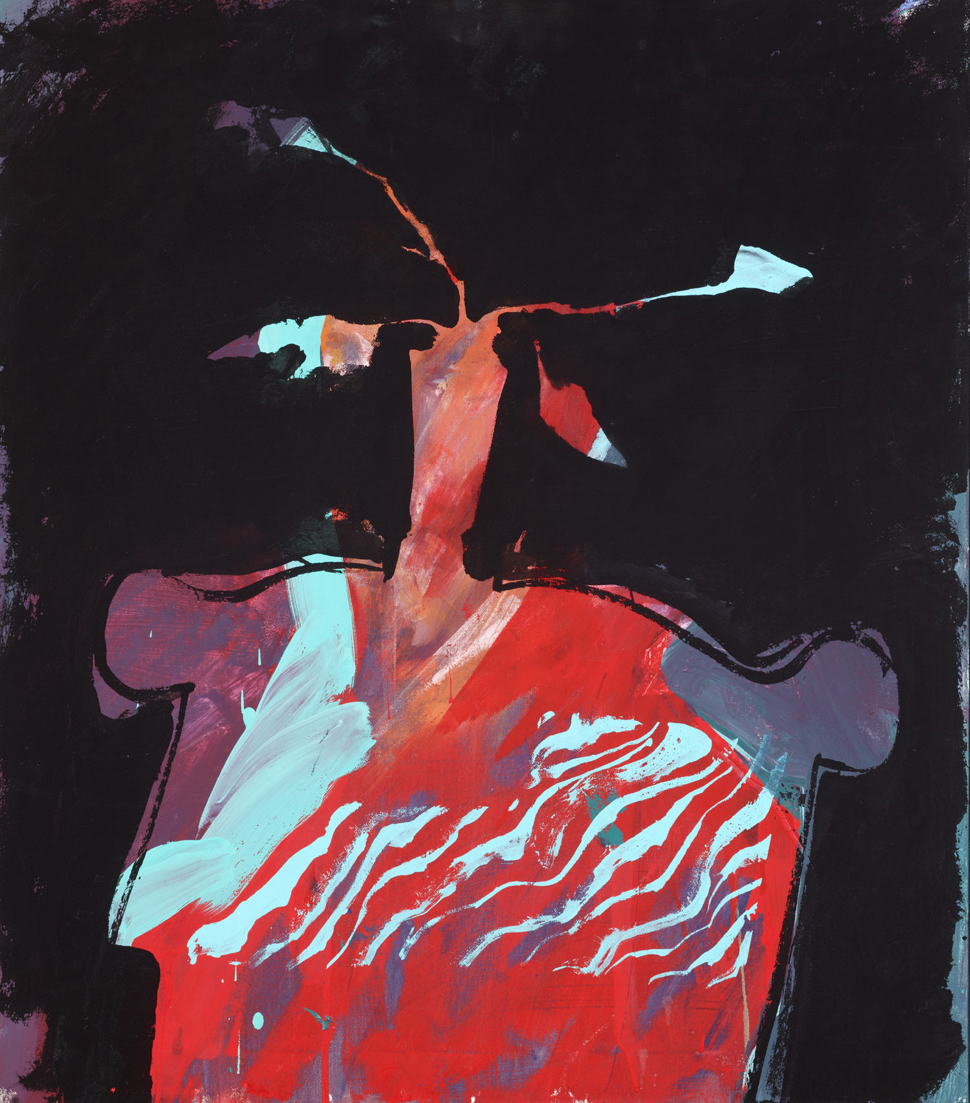
Roland Schauls (1953 - )Info
Roland Schauls (1953 - )
Hero, 1987, acryl on canvas
Born in Luxembourg, Schauls studied at the Staatliche Akademie der Bildenden Künste in Stuttgart, where he also taught at the Freie Kunstschule. His animated and tension-packed compositions base their expressiveness on a characteristic colourfulness and masterly colour effect. Despite his subject matter being conventional – figures, landscapes, interiors and still lifes – his overdrawn contorted subjects appear abstract and often reveal ruptures in perspective. In doing so, the artist brings into question traditional composition styles and old-school viewing patterns of the observer. “Hero” also reveals itself as a portrait in the broad sense, identifiable as such only through the title. Schauls’ best known work, a collage of more than 500 portraits of renowned painters, from Rembrandt to Dürer to Delacroix, is displayed in the Centre Culturel de Rencontre Abbaye de Neumünster.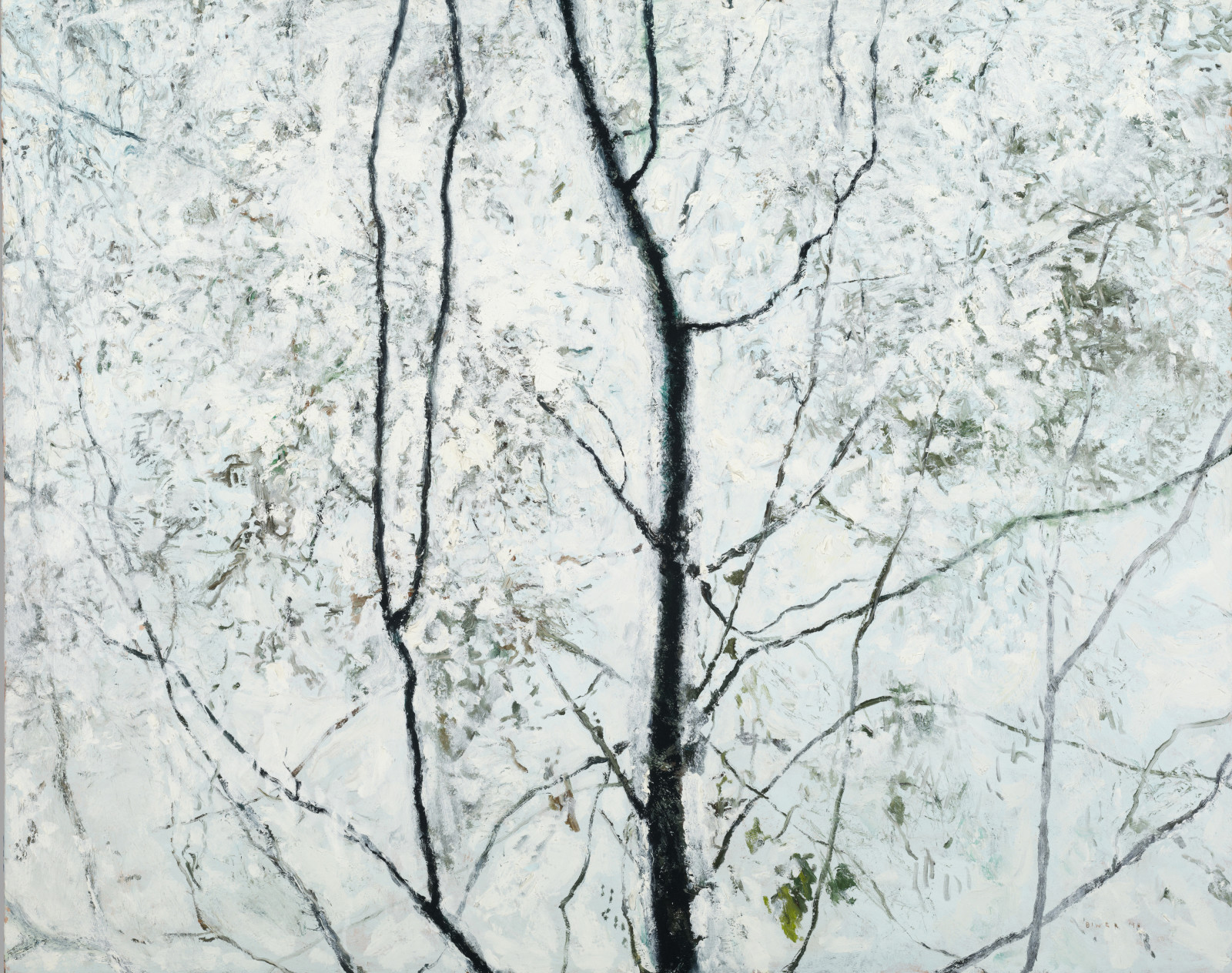
Jean-Marie Biwer (1957 - )Info
Jean-Marie Biwer (1957 - )
With trees, 1997, acryl on canvas
Jean-Marie Biwer has worked as a painter, graphic artist and sculptor in Luxembourg since 1980. His work often focuses on nature’s various facets. He frequently picks details from nature in an abstract form – such as the vertically rising branches shown here, with the rampant roots underneath, and the almost inconspicuous pebble stone, which takes centre stage in a manner that is both monumental and singular. In doing so, the artist disregards objects and details that do not appear important to him and instead places the characteristics deemed essential in his eyes into the foreground, with the result that his works develop into profound snapshots of nature’s beauty.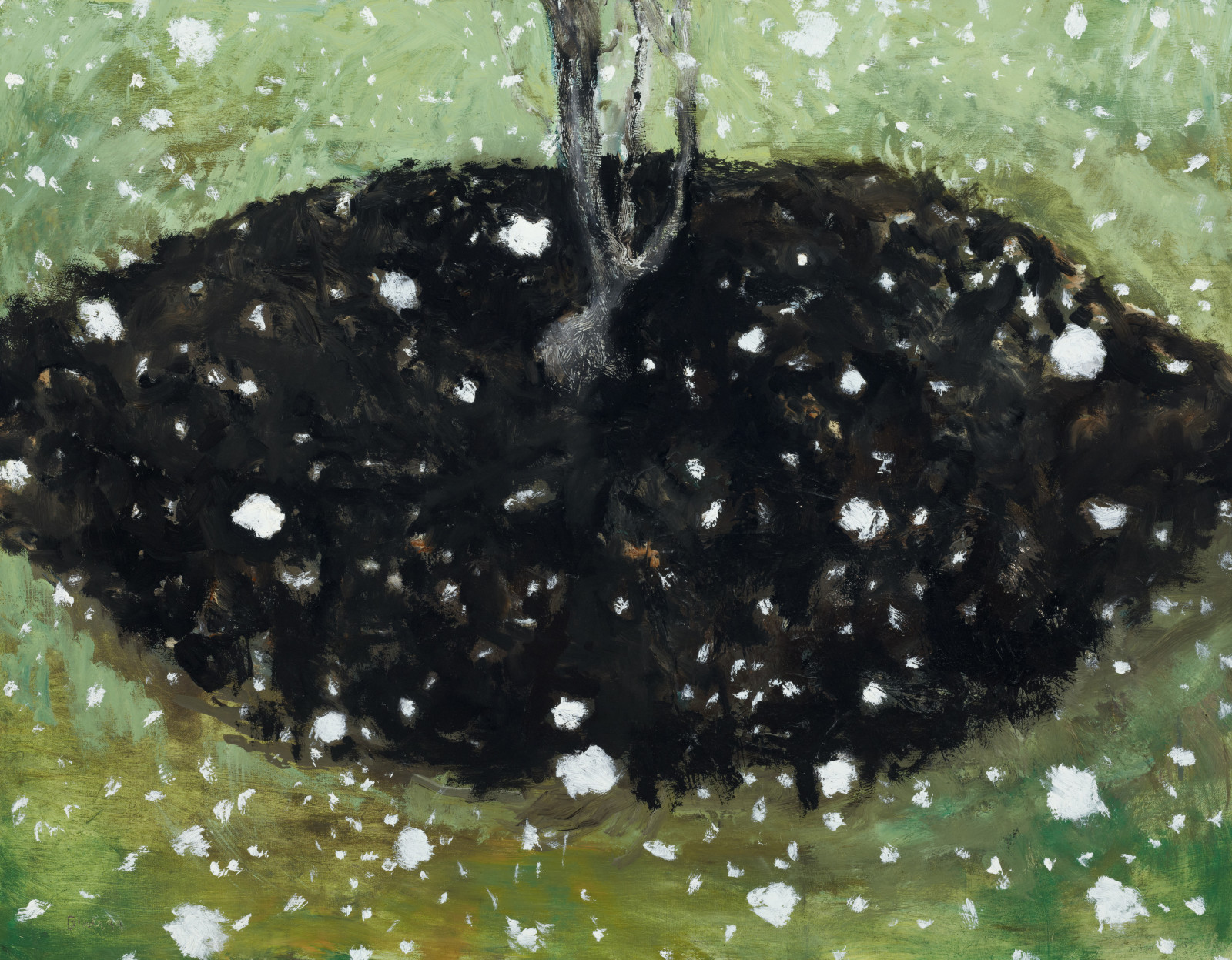
Jean-Marie Biwer (1957 - )Info
Jean-Marie Biwer (1957 - )
With trees, 1997, acryl on canvas
Jean-Marie Biwer has worked as a painter, graphic artist and sculptor in Luxembourg since 1980. His work often focuses on nature’s various facets. He frequently picks details from nature in an abstract form – such as the vertically rising branches shown here, with the rampant roots underneath, and the almost inconspicuous pebble stone, which takes centre stage in a manner that is both monumental and singular. In doing so, the artist disregards objects and details that do not appear important to him and instead places the characteristics deemed essential in his eyes into the foreground, with the result that his works develop into profound snapshots of nature’s beauty.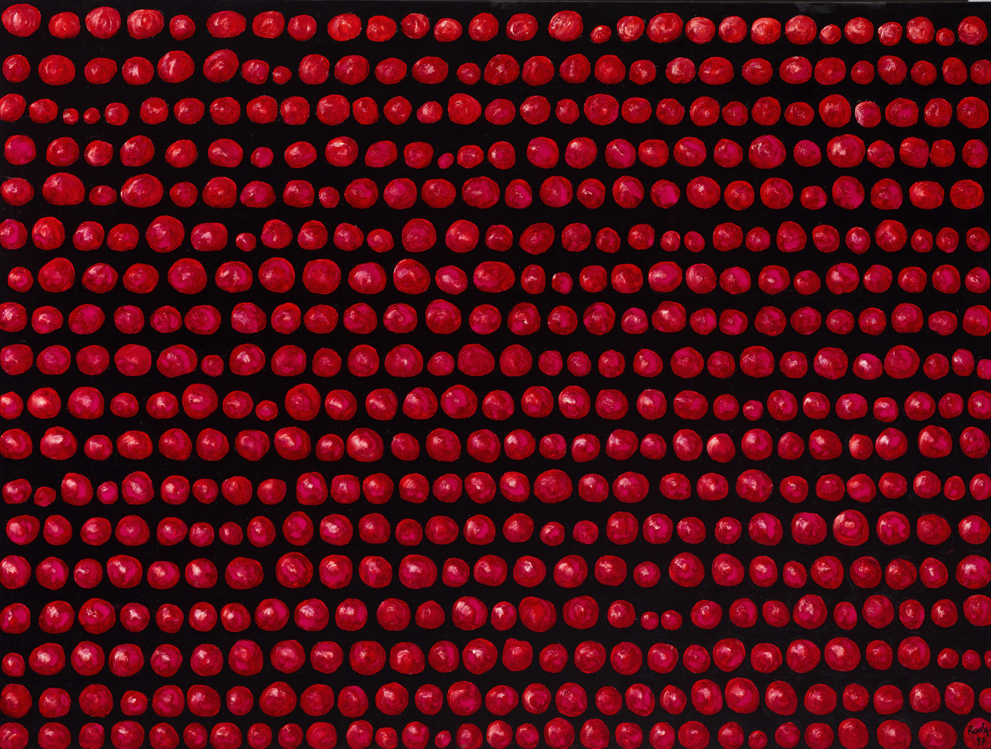
Fernand Roda (1951 - )Info
Fernand Roda (1951 - )
Tomatoes in Cairo, 1997, oil on canvas, watercolours
Fernand Roda’s preferred subject is nature in its various guises. The tool for this purpose is repetition: in an animated, rhythmic manner he repeats and abstracts naturalistic forms, assembling them into impressive, large-scale image worlds. He aspires to scrutinise and explore a sensual and spiritual world, and to achieve this he follows a much more theoretical path than the representational objects in his paintings might initially suggest. Roda was born in Luxembourg and lives and works in Düsseldorf, where during the 1970s he studied at the Kunstschule under Joseph Beuys, who according to his own statement strongly influenced and nurtured his artistic development.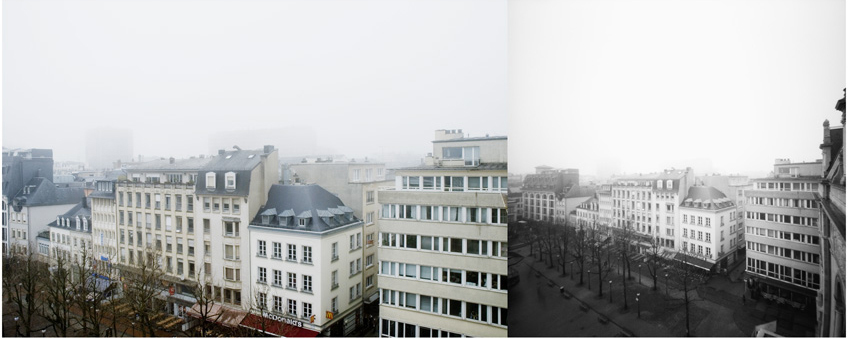
Bruno Baltzer (1965 - )Info
Bruno Baltzer (1965 - )
Parallax - Scopies, Cercle - Cité 12, 2011 Tirage encre sur papier Hanemühle Baryta FB, 350 gsm., collage Dibond
Bruno Baltzer hails from the French Provence and discovered photography at the age of 21. He initially worked as an assistant in a leading Parisian fashion and advertising studio, before honing his photography skills with internationally renowned photographers Nick Knight and Javier Vallhonrat. He has lived and worked in Luxembourg since 1995. His work focuses on confrontation with urban spaces. The 12-part series “Parallax – Scopies” juxtaposes panorama-type views of a public place like diptychs. To this end he installed a pinhole camera and a single-lens reflex camera on the same axis. The result is two picture details of differing depths – a black and white version and a colour version. At first glance, the works invoke irritation, prompting a more acute observation. In a challenging manner, Baltzer thus ponders the scientific history of photography and stereoscopy.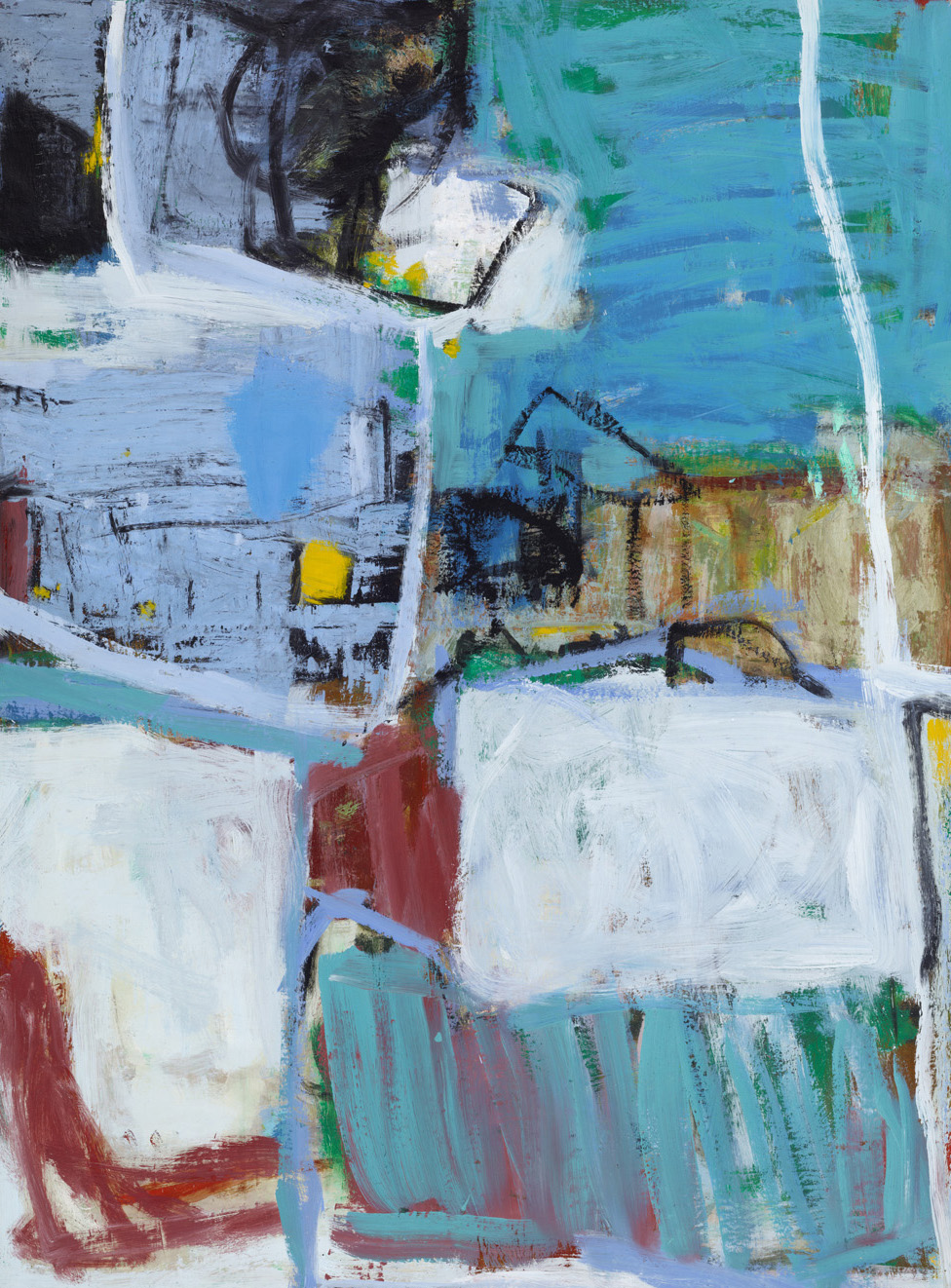
Tung-Wen Margue (1959 - )Info
Tung-Wen Margue (1959 - )
The blue waters, around 1993, oil on canvas
Native Luxembourger Tung-Wen Margue lives and works in France. Born to a Chinese mother, he states that he feels strongly drawn to Asian art and culture. He studied at the École Nationale Supérieure des Beaux-Arts in Paris and was also a Master’s student at the Sorbonne. Countless travels have led to him embedding Far Eastern culture and language into his image worlds. His expressive works are characterised by a free colour flow and abstract forms, evoking an association with Asian calligraphy and painting techniques. His flowing compositions suggest echoes of landscape and nature depictions, underlined by narrative titles such as “TheBlue Waters”.
Bettina Scholl-Sabbatini (1942 - )Info
Bettina Scholl-Sabbatini (1942 - )
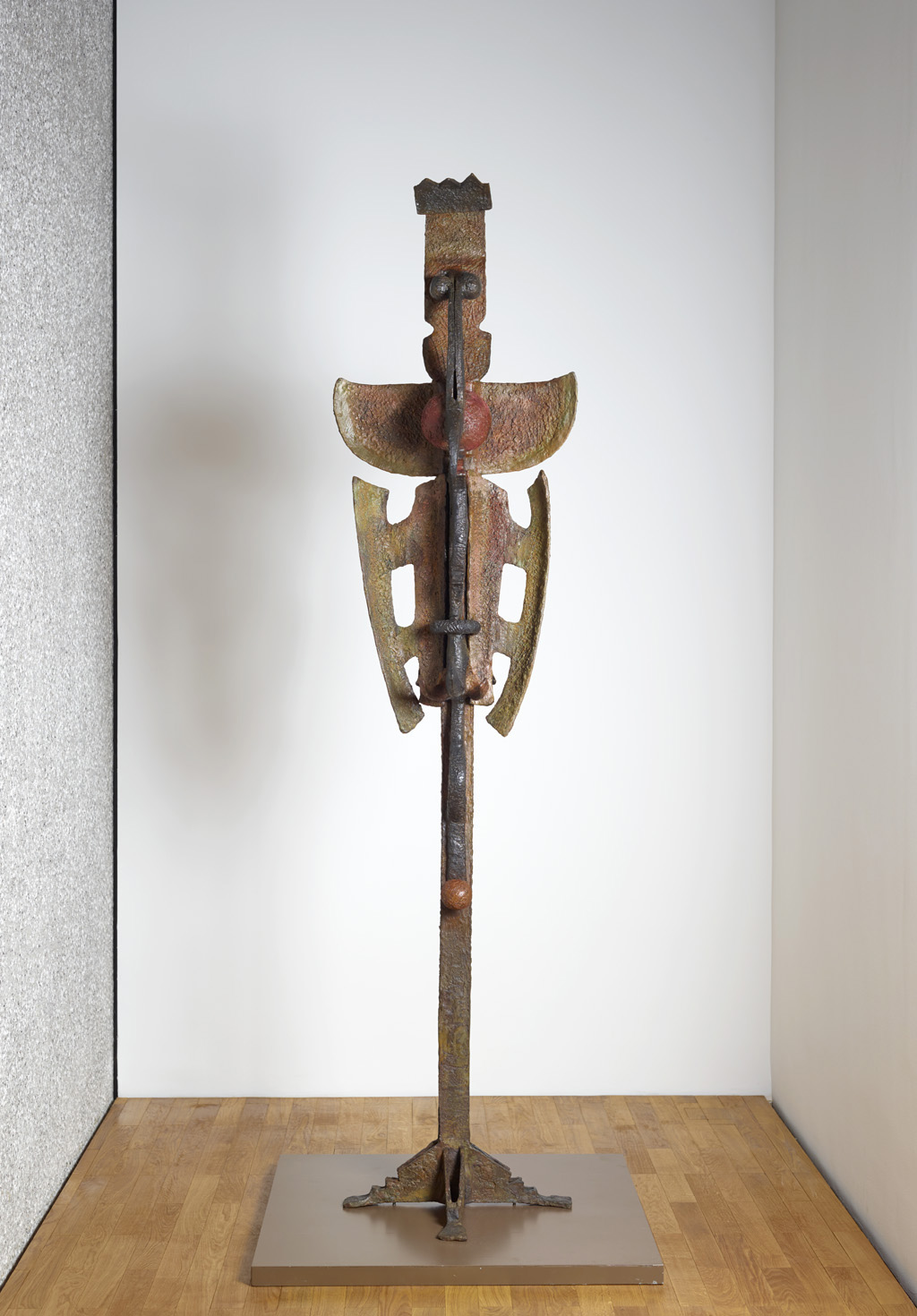
Maya Bird, 2003, bronze sculpture
Bettina Scholl-Sabbatini initially studied ceramics and sculpture in Florence, before taking up drawing and painting in Paris. From the mid-1960s to the mid-1980s, the artist created both abstract and figurative works, before finding her way to her current style. This bronze sculpture and its archaic form is reminiscent of the mythologically charged art from the cultural world of Central America.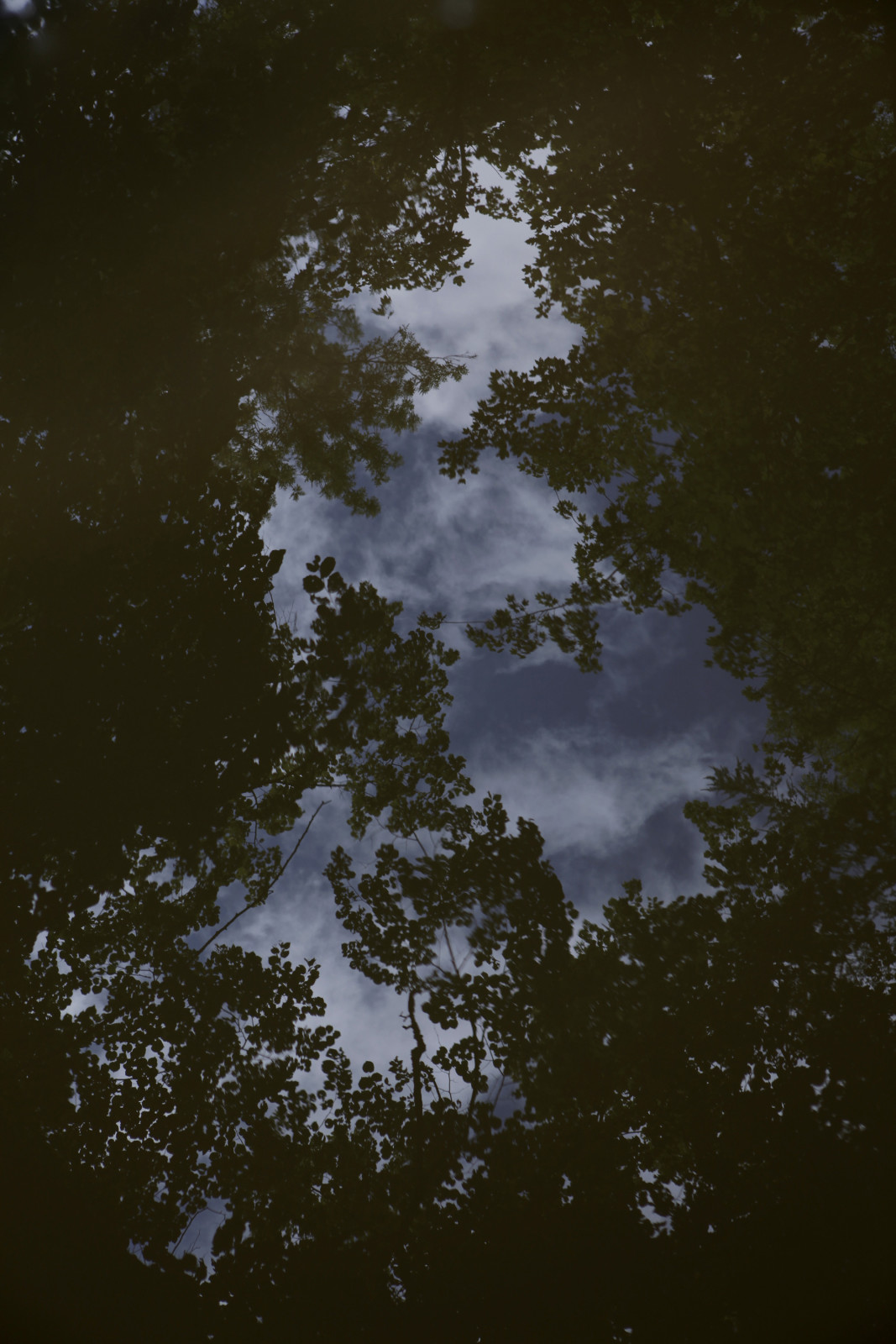
Armand Quetsch (1980 - )Info
Armand Quetsch (1980 - )
Sans titre, 2012
Armand Quetsch’s photo series occupy the field of tension between documentation, recollection and oblivion. Simple architectural, object or nature details are arranged into strong atmospheric pictures, which become “timeless” emotional memory fragments. The location as such becomes unimportant and recedes into the background. The artist is more concerned about conveying emotion and atmosphere. In this perfectly composed photograph, the observer peers through a broken-up tree canopy into a light blue sky. The blazing sun occupies the centre of the image. On the one hand, this excerpt appears familiar, but on the other hand it is disturbing and enigmatic, inevitably captivating the observer’s eye.